As the school year winds down, many educators and program staff are asking the same questions:
What worked, what didn’t, and what should we do differently next year?
It’s an important exercise for adults. And it can be just as valuable for kids!
Making time to reflect and debrief, especially after play, can help kids process how they feel physically and emotionally, find what they enjoy most, and even provide feedback for next time.
Here are a few ways you can build reflection into playtime and the impact it can have on the rest of the day.
The Power of Reflection
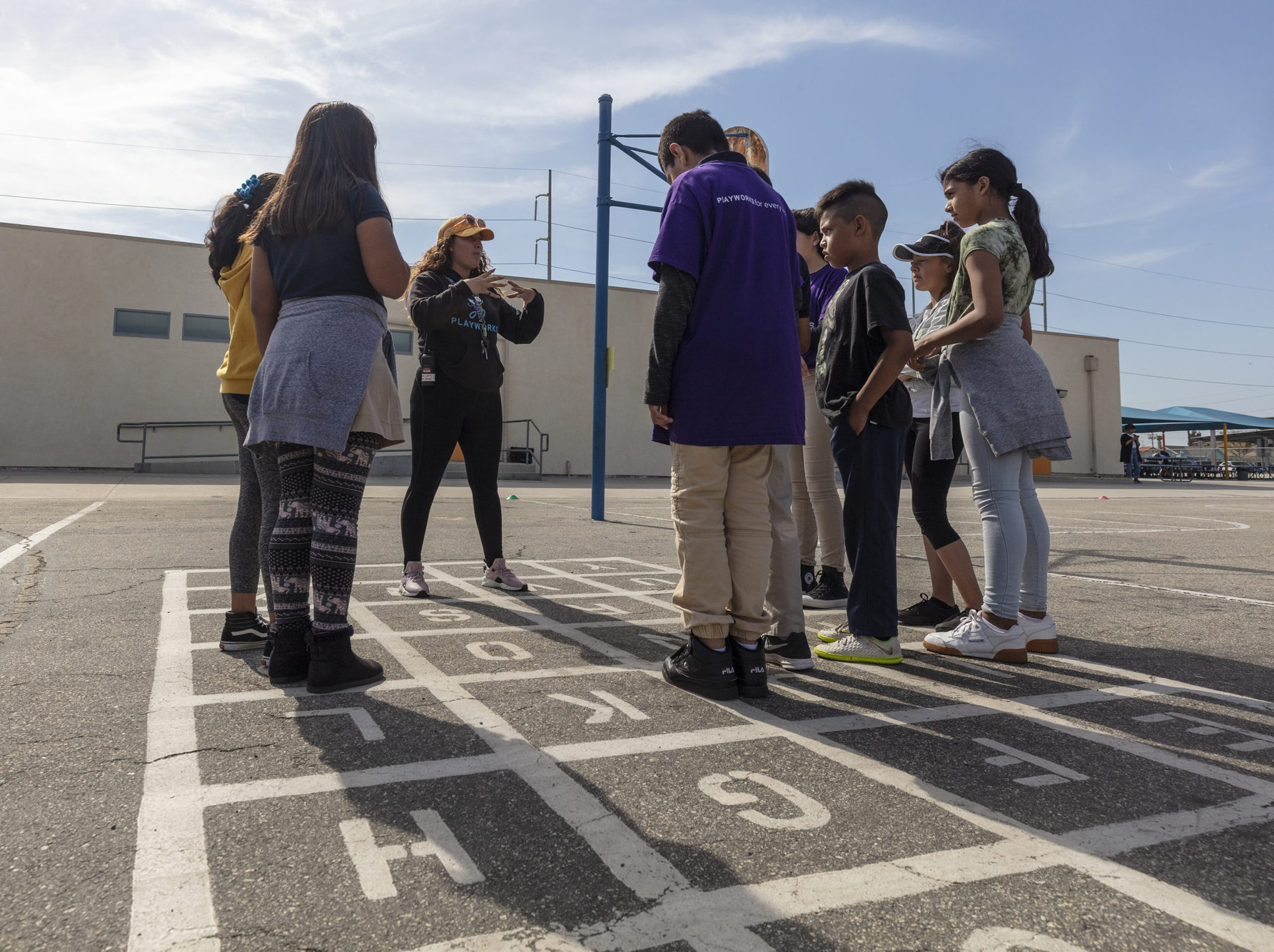
Reflection can serve as a bridge between experience and insight. When we provide kids with an opportunity to pause and reflect on what they experienced during an intense game of Switch or Capture the Flag, it’s not just a cool-down activity; it’s also helping them develop metacognition, or the ability to consider their own thinking and experiences.
Research from the Lemberg Children’s Center shows that children who are given regular opportunities to reflect on their activities score higher on measures of social skills, literacy, and overall development. By asking simple questions, we help kids process emotions and navigate social dynamics in real-time.
3 Questions to Ask at the End of Play
The time available for transitions from playtime can often be tight, so it’s important to keep your reflection and debrief questions focused and efficient. Here are three of our favorite questions to ask that you can use as a starting point for your debrief:
- “What felt good during the game/activity today?”
Why: This focuses on positive reinforcement and physical awareness. - “Was there a moment that felt challenging? How did you handle it?”
Why: This encourages problem-solving and critical thinking. - “What is one thing we could do differently next time to make the game even better?” Why: This promotes intentionality and group collaboration.
Want to build play and reflection into your routine? Playworks’ SparkPlay digital tool gives you on-demand access to games, practical strategies, and ready-to-use lesson plans. The Facilitator Playbook add-on features built-in reflection prompts to support active, meaningful play.
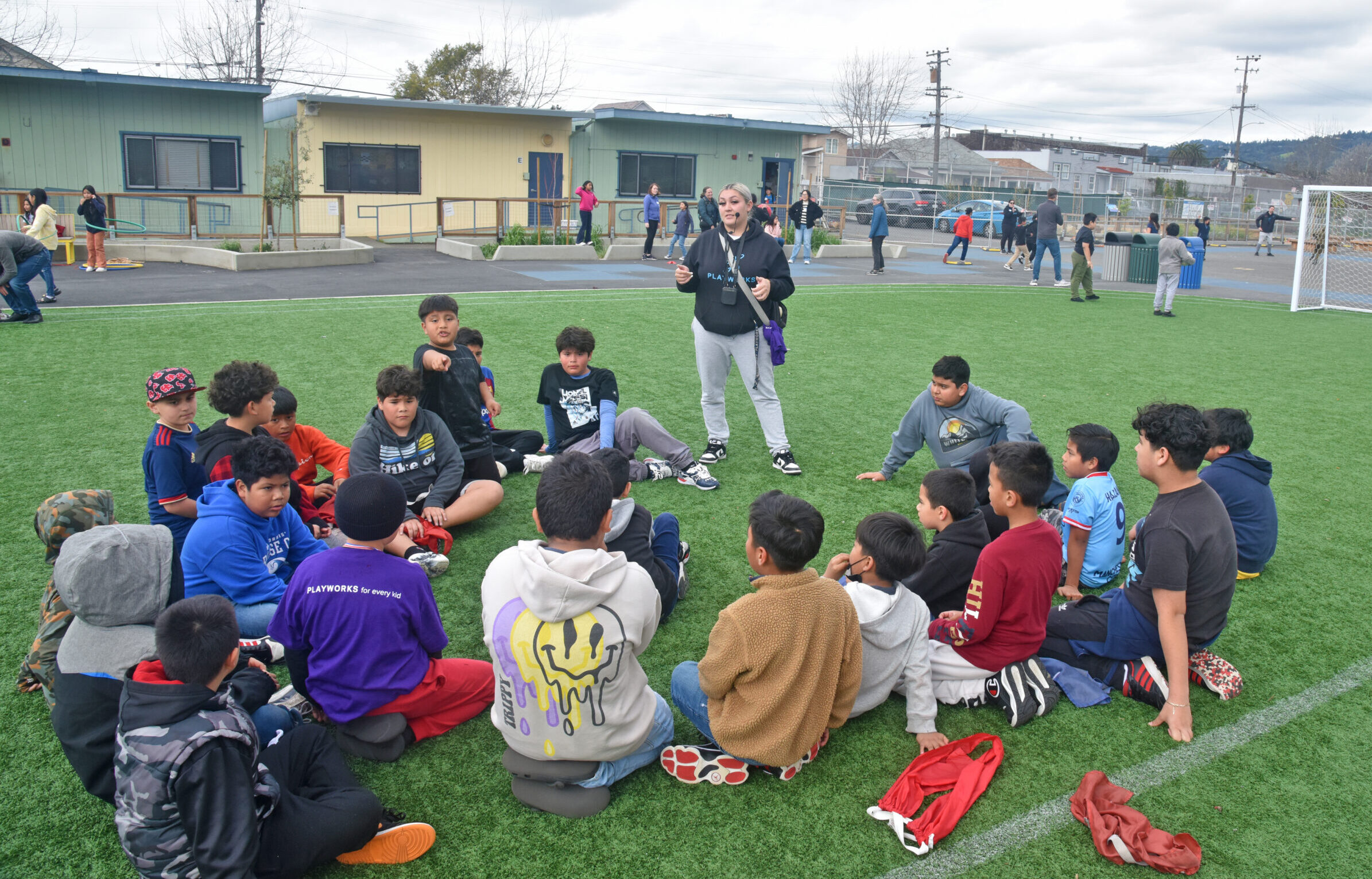 Reflection + Cool Down = Better Transitions
Reflection becomes even more powerful when paired with a short cool-down activity.
After active play, kids often need help resetting before heading back to class or another activity. Without that reset, leftover energy or unresolved conflict can carry over.
Need ideas? Check out some of our favorite cool-down activities and transitions.
Including a few minutes for transitions can make a huge impact on the rest of the day. A recent Mathematica study found that schools with Playworks programming recovered the equivalent of two weeks of instructional time annually.
Connecting the Playground to the Big Picture
The end of the school year can be the perfect “reflection moment” for students and staff. Just as we can reflect on a recess or individual play session, we can encourage students to reflect on their entire year.
As you wrap up your school year or program, consider using a similar framework to help process their progress and how they want to continue to grow.
These conversations help kids:
- Recognize their growth
- Build confidence
- Practice goal-setting
- Feel a sense of closure
These prompts can help get the conversation started:
- What was your favorite memory from this year?
- What is a skill you learned this year that you’re proud of?
- What are you looking forward to most about next year?
- What’s a game you got better at this year?
- How have you grown as a teammate?
- What’s something you learned about yourself during play?
- What advice would you give next year’s students so they can have more fun at recess/playtime?
Adult Impact
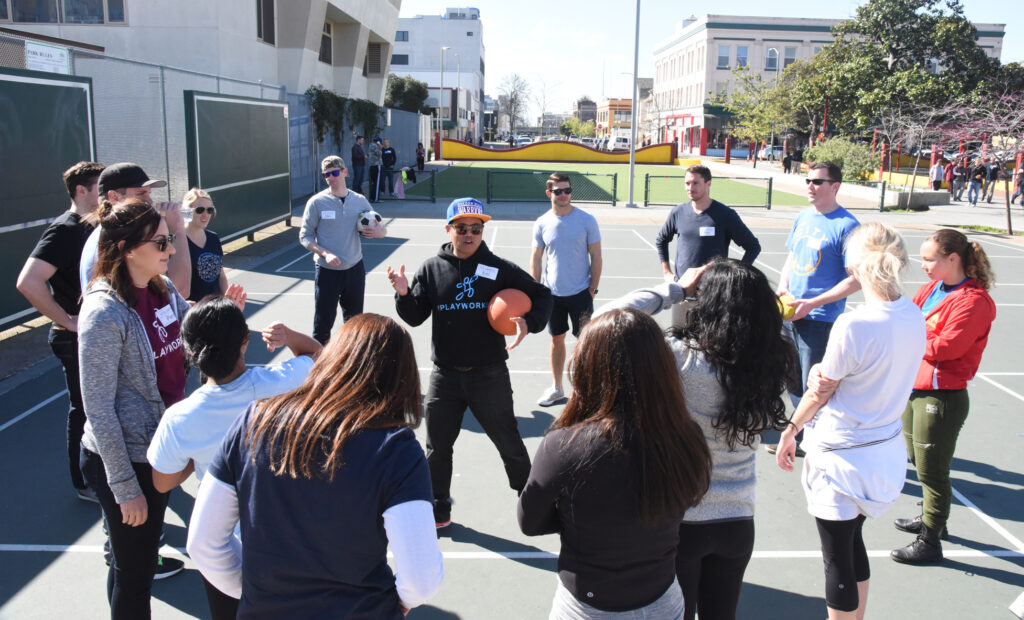
Reflection can be a valuable tool for everyone in your program. As school and out-of-school time staff, taking a few minutes each day to ask and answer the same reflection prompts can help adults show up more intentionally in our work and better adjust to the needs of our kids.
Adding reflection time to play might feel like a small change, but over time, it helps kids and adults make sense of their experiences, build stronger connections, and approach each new activity with an open mind.