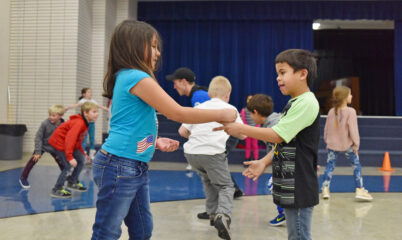
The American Academy of Pediatrics (AAP) recently published an updated policy statement, The Crucial Role of Recess in School, and their message is clear: recess is not a luxury or an afterthought. It is a fundamental activity that optimizes a child’s mental, physical, and cognitive development.

The statement doesn’t just recommend recess. It makes a case for why recess is one of the most developmentally important components of a child’s school day and why cutting it has real costs.
- Recess is where critical social skills are actively learned. Rather than being instinctual, abilities like conflict resolution, communication, and self-regulation are practiced and developed during quality playtime.
- Active breaks are vital for brain function and mental health. Stepping away from academic demands for physical activity improves a student’s focus and memory while serving as a crucial tool for stress management.
- Access to play is a growing issue. Despite its proven benefits, recess time is shrinking nationally, with many students disproportionately losing out on the essential playtime they need most.
What the AAP’s updated guidance affirms is that how recess happens matters as much as whether it happens.
For 30 years, Playworks has been working alongside schools and out-of-school time providers to bring quality play to kids across the country.
When there’s someone on that playground who knows every kid’s name, facilitates engaging games, and helps students work through conflict instead of carrying it back inside, it creates a positive shift that extends beyond recess.

A Mathematica randomized controlled trial found 43% fewer reports of bullying and aggression at Playworks schools, and teachers recovered the equivalent of two full weeks of instructional time per year simply because students came back from recess ready to learn.
The RAND Corporation has recognized Playworks with a Tier 1 Social-Emotional Learning designation, placing it among the most rigorously evaluated programs in the country.
The full AAP policy statement, The Crucial Role of Recess in School, is available in Pediatrics.
Know a principal, teacher, or other member of your network who would find this research interesting? Share it with them and help create greater visibility for the positive impact play can have!
Read more in these articles from EdSurge and the Los Angeles Times.