In the summer of 2026, Ty, a recent fifth grader at Castle Elementary, stood before a judge at the Washington County Fair to present a project on his year as a Playworks Junior Coach. He had spent weeks preparing, but the story behind his presentation had taken a full school year to unfold. Through leading games and helping younger students at recess, Ty had his first chance to take on a leadership role. Now, he was sharing what he had learned.
On the other side of the Twin Cities at the Carver County Fair, Arthur presented a project of his own. He talked about leading games at Watertown-Mayer Elementary School and why the third graders he coached became his favorite group.
The boys had never met. But when each had the chance to choose a 4-H project that demonstrated leadership, both picked their experience as a Playworks Junior Coach.
Both earned top recognition at their county fairs.
Their projects looked back on a year of teaching games, working with younger students, and learning to lead. They also gave each boy a chance to explain why the experience mattered to him.
What is a Junior Coach?
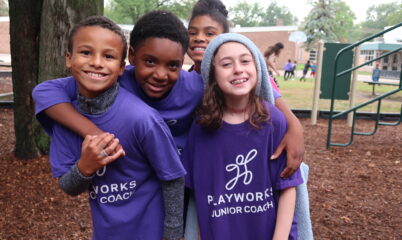
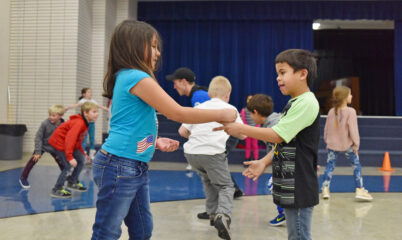
The Playworks Junior Coach Leadership Program gives older elementary students, usually fourth- and fifth-graders, a leadership role during recess. Junior Coaches learn games in weekly training, then lead them for younger kids. They explain the rules, keep play fair, help settle disagreements, and invite in kids who are standing on the sidelines.
The role comes with a shift schedule and real responsibility, and the younger kids can easily spot Junior Coaches on the playground by their signature purple t-shirts or vests.
Ty: From Looking Up to Leading Others
 Ty first became interested in Junior Coaching by watching older students at Castle Elementary lead games at recess. He thought it looked cool and wanted to be one of them.
“I looked up to the kids who came out and taught us games, and I thought I wanted to be one,” Ty said.
As a Junior Coach, Ty got the opportunity to lead games and act as a role model on the playground, just like the Junior Coaches he had admired when he was younger.
“It was my first leadership opportunity,” Ty said.
Junior Coaching meant more than teaching the rules of a game. Ty also had to help younger students work through disagreements, include others, and keep the game fun, even when someone got out. Angie, his Junior Coach program lead and a science teacher at Castle Elementary, said Ty understood that part of the role. He was good at connecting with younger students and helping them feel comfortable.
His mom, Amber, noticed changes outside of school, especially during his rec soccer games. Ty became more willing to encourage teammates, include others, and step into a leadership role.
For his 4-H project, Ty put together a slideshow about his experience as a Junior Coach. He presented it at the Washington County Fair and earned a Champion ribbon.
The project gave him a chance to reflect on how far he had come. He had started out watching older students lead. Now, he could talk about what it was like to take on that role himself.
Arthur: Building Confidence One Game at a Time
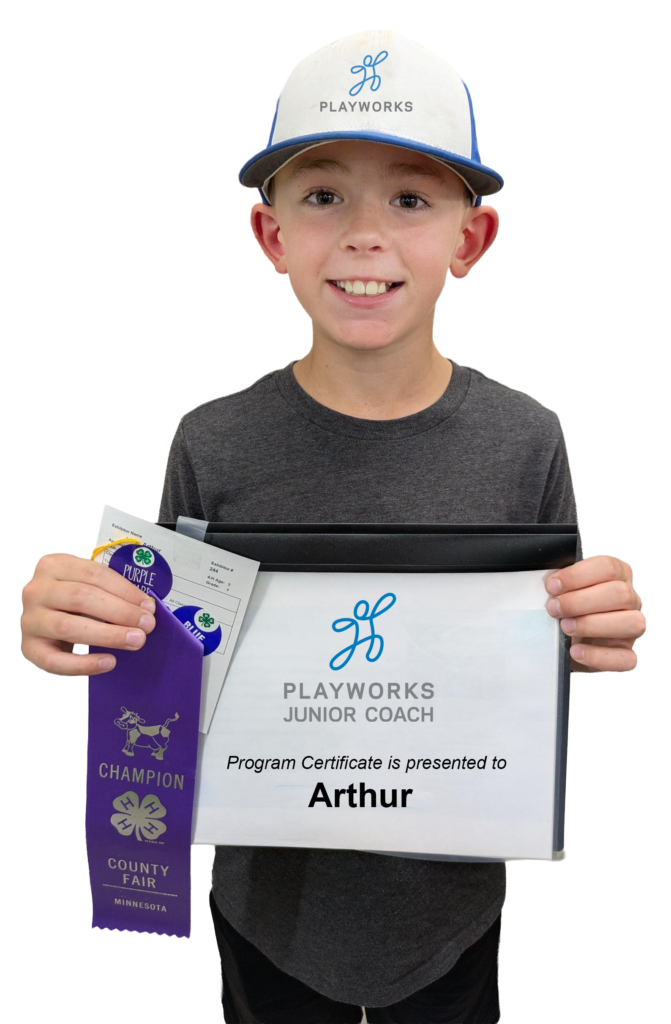 Arthur was nervous when he first became a Junior Coach. His mom, Holly, describes him as shy and quiet, and leading younger students pushed him outside his comfort zone.
As he got to know the kids, he grew more comfortable. He began teaching games, helping keep play fair, and making sure everyone had a chance to join in. Junior Coach meetings gave him time to learn new games and practice teaching them.
Holly noticed a difference beyond recess, too. Arthur became more aware of kids who were left out and more likely to invite them to join an activity.
“Just that confidence is really fun to see with him and see him challenge himself,” she said.
When Arthur chose his 4-H project, he wanted to show what he had learned about leadership. His presentation covered his responsibilities as a Junior Coach, the training and activities he took part in, and the program’s impact at his school. He also described how he could use those skills in 4-H and student council.
Presenting to a judge made him nervous, but he persevered and shared what he learned as a leader on the playground. The project earned top recognition in his category, and he went home with his first ribbon.
For Holly, seeing Arthur explain his experience to a judge was a point of pride. He took on something that once made him uncomfortable and found a way to share what he learned.
Leadership Beyond Recess
Arthur and Ty’s stories show what can happen when kids get the chance to lead. As Junior Coaches, they learned to teach games, work with younger students, and make sure others had a chance to play. They also gained experience they could carry into 4-H, rec sports, student council, and other parts of their lives.
But opportunities like these don’t happen on their own. Junior Coach gives students a chance to practice leadership in a place they know: the playground. They learn by doing, with younger students counting on them and a school community cheering them on.
Supporting Playworks helps make those opportunities possible for more kids. Every student deserves the chance to find their voice, build confidence, and discover what they can do when given the opportunity to lead.