Key Takeaways
-
Belonging drives attendance. Kids show up where they feel they belong, and recess is where every kid can find it.
-
A great recess has… Known games, simple norms, and adults who play let every kid join in.
-
Leading changes kids. Junior coaches see themselves differently and have a reason to show up.
-
Results reach the classroom. That means stronger attendance, less bullying, and faster transitions back to learning.
-
Title I anchors funding. Many schools add Title IV-A, Title II, and other sources on top of it.
The Attendance Strategy Already on Your Schedule
When schools set out to improve attendance, they usually look to policies, family outreach, and incentives. Those all matter. But in our 30 years of partnering with schools, we’ve seen that one of the strongest reasons kids show up is already on the schedule: recess. It’s the part of the day kids look forward to most, and when it’s done well, it gives them a reason to come back tomorrow.
I recently joined Jethro Jones on the Transformative Principal podcast to talk about recess, attendance, and how schools are funding both. Jethro knows the power of recess from experience. When he became principal of Copperview Elementary in Utah in 2011, people warned him to expect “a line of kids outside your office door” after every recess with referrals for behavioral issues. Partnering with Playworks was one of the things that made sure that line never formed.
That line disappearing is often our first sign that recess is working. And the effects reach well beyond the principal’s office, all the way to who shows up the next morning. Recess can build the sense of belonging that keeps kids coming back to school, and it’s an attendance strategy most schools can put in place, and fund, with resources they already have.
Belonging at Recess Drives Better Attendance
Students show up where they feel like they belong, and recess is one of the few times in the day when every kid can find that at once.

I hear it directly from kids in our schools: “I want to be at school because I belong there.” The data points the same way. A UC Berkeley study published in the Journal of School Health found that Title I schools partnering with Playworks had a lower proportion of chronic absenteeism than schools without it, even after accounting for school size, family income, and race/ethnicity.
I believe those results come down to how school feels to kids. If you learn that you can count on your classmates to play rock-paper-scissors to resolve a disagreement the same way every time, you start to feel like you can count on being cared for when you’re disappointed. That might be a little deeper than most people think about play. But come play with me on a Playworks playground, and you’ll start to feel it too.
Sometimes the reason to come is even simpler. Not long ago, a note came in from a principal whose students kept stopping by on their way out the door with the same question: Is three-line basketball going to be played tomorrow at recess? “At first, I didn’t understand why they were asking me,” the principal wrote, “and now I realize it’s a reason to come.”
Kids’ excitement about school is contagious, and families start showing up, too. At Copperview, Jethro watched worries about kids getting hurt at recess fade, and the community started showing up. The PTA volunteered to repaint the basketball and four square courts and paint a map of the United States for one of the games.
“The school community was taking pride in the school again,” he told me. I hear the same from district leaders. One superintendent told me his schools had become “the schools where parents want to be, where they want their kids to be,” because families know their kids will be included and have fun. That makes sense to me. When our environment is vibrant, and people care about it, we feel cared for.
What Changes When Recess Is Prioritized
Unorganized recess isn’t neutral. Without games, norms, and adults who know how to run them, many kids spend recess on the sidelines.
I still remember my first day at Playworks. I went out to a school we had just started working with, and on a big blacktop, a small group of kids was running a rough game of chase. The majority of the kids were standing around the perimeter, trying to stay out of harm’s way. I asked the coach what was happening. He told me they needed to set up known games, game areas, and basic norms like high fives, “good job,” and rock-paper-scissors to settle disagreements, and then to come back in a couple of months. When I did, the playground was transformed.
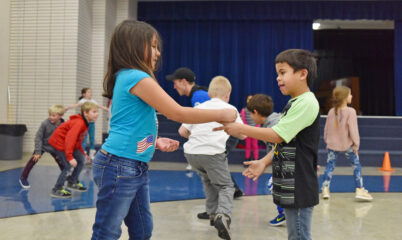
The games themselves are built for inclusion. In four square, getting out earns you a high five instead of being singled out, and the line moves fast enough that you’re back in quickly. Big tag games like sharks and minnows keep a whole group moving with no single winner or loser. Kids are intrinsically motivated to play, and they will accept getting out or disappointment if they know they’ll get to play again soon. Because the stakes are low, a little bit of pride at most, those moments are where kids practice resolving disagreements, being a teammate, and pushing through disappointment.

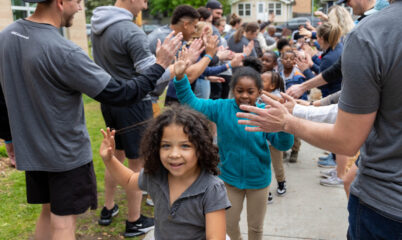
Here’s a little secret: some of the most important players at recess are the grown-ups. Kids know they have mastery when they play. It’s the only time in the school day when they feel as good as the grown-ups. Watching a grown-up get tagged tells a child, “We actually have something in common.” Jethro saw it on his own playground: with adults playing alongside students, the number of incidents dropped.
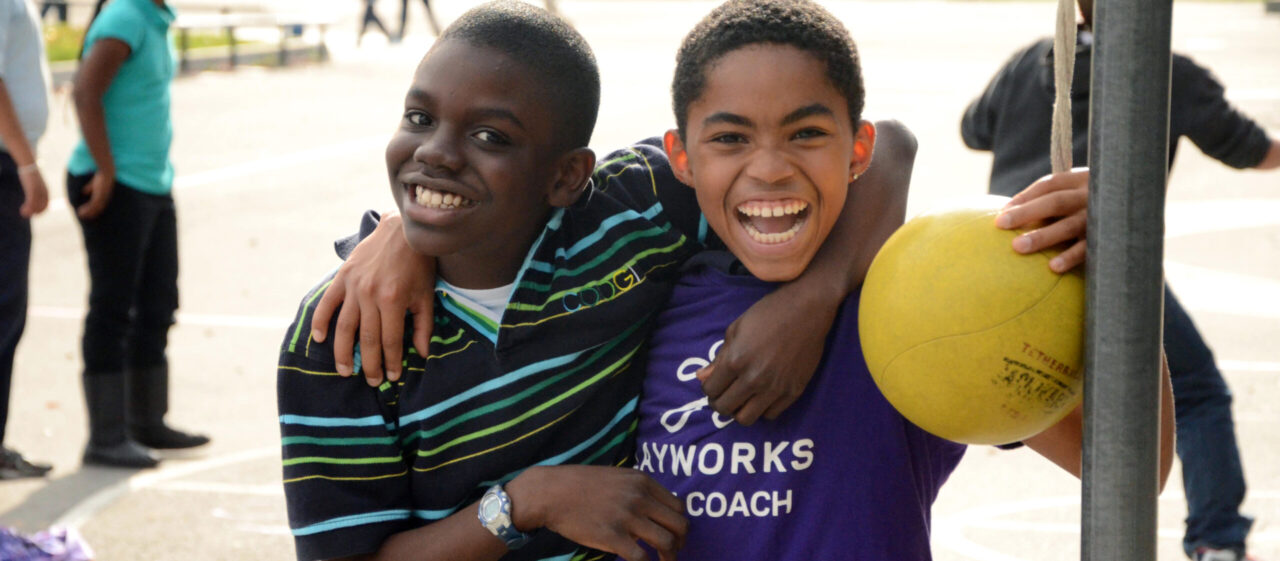
An organized recess also creates room for students to lead. When I joined Playworks 22 years ago, I had three kids of my own and thought I knew an awful lot about how kids learn. I did not adequately understand the power of a peer leader. Through our Junior Coach program, fourth and fifth graders–often ones their teachers think could use a leadership opportunity or who are struggling with the institution of school–learn to run games for younger students. It’s an honor that comes with expectations, like showing up and finishing homework. Watching a kindergartner light up because a fifth grader is paying attention to them changes how that fifth grader sees themselves. We’ve since hired former Junior Coaches as Playworks staff, and they describe it as a turning point in their lives.
The effects carry back into the classroom. A randomized controlled trial by Stanford University and Mathematica found less bullying and a greater sense of safety at Playworks schools, and Mathematica also found that Playworks schools spend 27% less time transitioning from recess back to learning. That tracks with what we know about the brain. All of us need to feel safe for our energy to go to the task in front of us, and kids are no different.
Funding Attendance Strategies in a Tight Budget Year
Funding is tight, but the schools making this work are planning around stable sources and combining them.
Let’s start with the fact that it is a tough funding environment for schools and districts. Federal K-12 dollars are contracting, several dedicated grants have been proposed for consolidation into a single block grant, and more of the decision-making is landing with states and districts. We all have to be creative together.
The good news is that the most reliable source is also the most natural fit. Title I, the largest federal funding stream for schools, has been preserved in recent budget cycles, and many of our partners use it. Because Playworks supports student engagement, attendance, behavior, and school climate, it fits naturally within schoolwide Title I strategies.
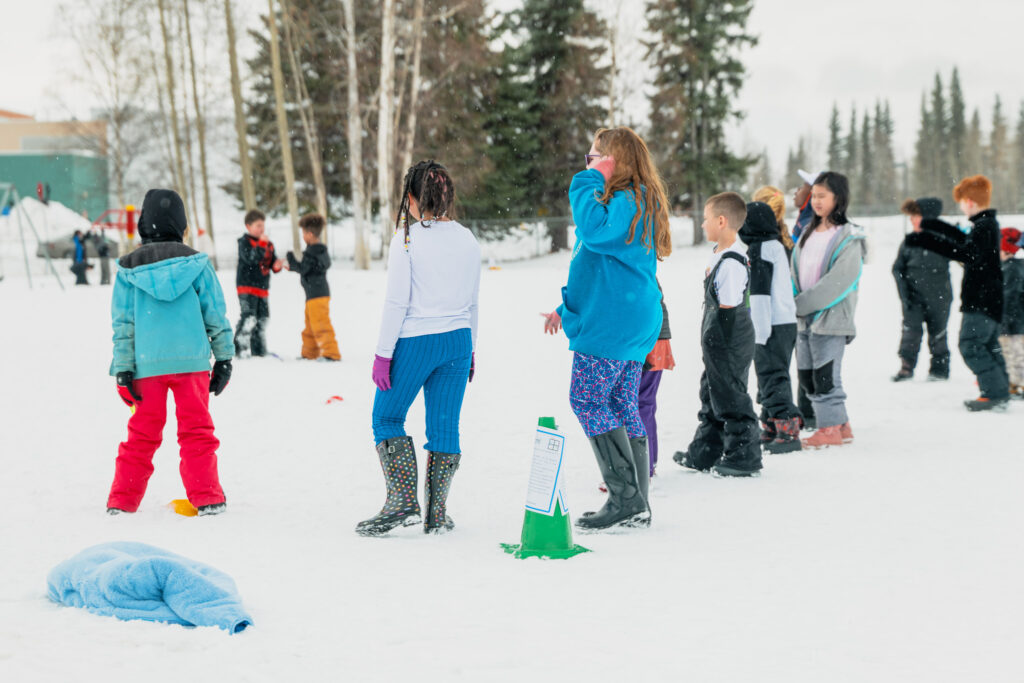 Other sources can extend that work. Title IV-A focuses on safe and healthy students, and running around and having fun are great ways to be both. Title II supports professional learning, which is how we’re working in Fairbanks, Alaska: training school staff to run Playworks themselves so the capacity stays with the district. Rural districts may be able to draw on Title V, and before- and after-school programs can tap 21st Century Community Learning Centers funding. Many schools layer several of these together, alongside state sources and PTA fundraising.
Two things are worth keeping in mind. Most federal funds need to supplement, not replace, what a district already pays for. And program status can change from year to year, so it’s smart to check with your state education agency before finalizing plans.
You don’t have to sort this out alone. Our federal funding guide breaks down where each source stands for 2026-27, and a Playworks expert can help you find the right combination and provide alignment language for your district’s funding request.
Why Kids Show Up When Recess Works
Recess is often treated as “a nice to have” the most expendable part of the school day. I see it as the opposite. When recess is organized, inclusive, and led by adults who play, it builds the belonging that brings kids back the next morning. That matters more now than ever. My own kids are in their 20s, and I see how much technology surrounds young children today, pulling them away from real life. Families are telling us they’re worried. The good news is that the solution is already on the schedule. Recess is a built-in time. We know how to do this, and it’s not complicated to change.
So here’s my ask: find an opportunity to go play with the kids in your school, your family, or your neighborhood, and just notice how it feels. That is the kind of feeling you could help create for every kid at school every day, and we’re here to help.
To get started, take our Recess Checkup, or learn more about how Playworks helps schools reduce chronic absenteeism.