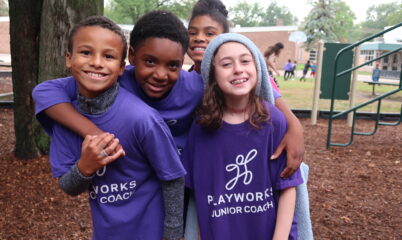
Jose Lopes Calderon was a fourth grader at Bret Hart Elementary in San Francisco when his Playworks Coach asked if he wanted to become a Junior Coach and help lead recess for the whole school.
His first reaction was surprise. “Me, of all people,” he remembers thinking. “At that point you think you’re so small, and they’re [Junior Coaches] these big, older people. So it’s like, ‘what can I bring to the team?’”
He said yes anyway. That decision had a transformational impact on him, and Jose is now a senior in college, and he still traces his first leadership lessons back to that playground.
Recess at Bret Hart before Playworks
Playworks came to Bret Hart when Jose was in third grade. Before that, recess often lacked organization and left some kids on the sidelines without a game or activity to engage in.
Once a Playworks Coach arrived, the playground filled with a variety of games such as foursquare and kickball, with room for any student who wanted to play. Jose was one of the school’s first Junior Coaches.
What is a Playworks Junior Coach?
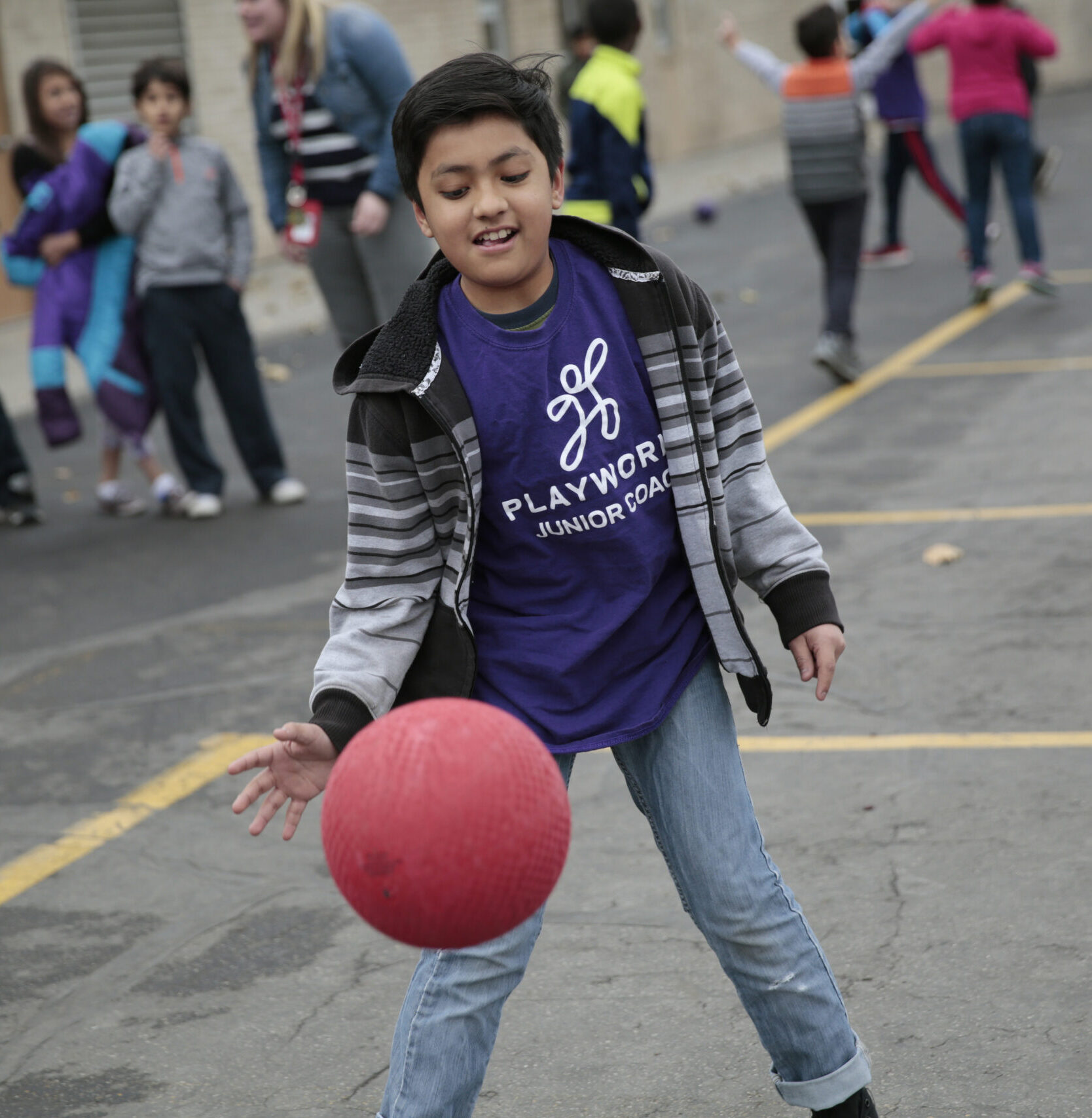
The Playworks Junior Coach Leadership Program gives older elementary students, usually fourth- and fifth-graders, a leadership role during recess. Junior Coaches learn games in weekly training, then lead them for younger kids. They explain the rules, keep play fair, help settle disagreements, and invite in kids who are standing on the sidelines.
The role comes with a shift schedule and real responsibility, and the younger kids can easily spot Junior Coaches on the playground by their signature purple t-shirts.
For Jose, a typical day started 10 to 15 minutes before recess, when he left class to help set up games. “Once recess started, it was just being there as a friend, inviting and encouraging students to play if they were sitting on the sideline or looked like they could use some fun,” he said.
Learning to lead at the Foursquare line
Foursquare had a special place on the playground at Bret Hart. There was a line to play before school, at recess, and at lunch. With that many kids wanting to get in the game, arguments over who was next in line and whether the ball landed in the square came up all the time.
Jose’s job was to keep the game fair and moving. Sometimes that meant restarting a round or helping two players settle a disagreement quickly and calmly when things got heated. The goal, he said, was “making sure everyone was playing and part of the game.”
He didn’t think of it as leadership and conflict resolution back then.
“I felt like I was just helping with games,” he said. “But looking back, I think those were really valuable skills I was learning.”

The younger kids noticed him too. Students in kindergarten through third grade started looking to him as a leader, and many would stop to talk with him after school. His little brother was in kindergarten at the time, and to his brother’s friends, Jose was the fun and engaging Junior Coach who came to their class to get everyone playing.
“They saw something I didn’t see”
When Jose reflects on what led him to become a Junior Coach, he remembers how much the adults around him believed in his potential. “In my mind, they saw something I didn’t see, so I took the opportunity.”
One of those adults was Coach Alvin Connor, known around Bret Hart as Coach AC. He held weekly after-school meetings with the Junior Coaches that covered everything from which games they wanted to run at recess that week to what was happening in their neighborhood and how to be a leader.
That’s when the role started to mean more to Jose.
“I realized it was less about creating games and more about creating community and building skills,” he said.
Coach AC also kept his office open before and after school, and he talked with students about college and their future goals. “He really ingrained in us that we should go to college, that we had potential and could do great things,” Jose said.
Still playing
Jose is now studying finance at the University of Rochester and spent a summer interning in investment management in Boston.
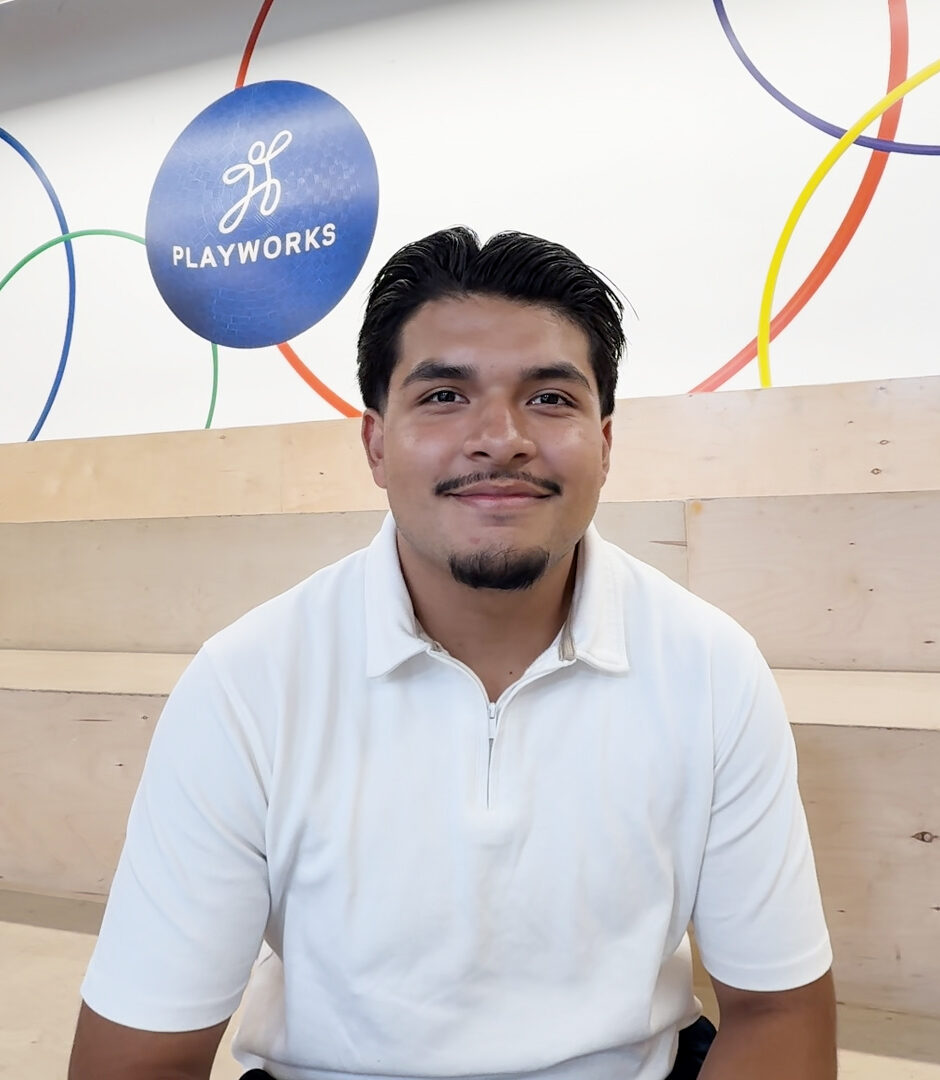
Even on the other side of the country, Jose sees evidence of Playworks’ impact happening all around him. During his time in Boston, he remembers spotting a group of kids wearing Playworks t-shirts while passing a playground. “My mind instantly went back to my experience as a Junior Coach,” he said.
When he thinks back to his time on the playground wearing that Junior Coach shirt, the leadership experience he gained still stands out the most.
“Playworks gave me my first taste of leadership,” he said.
“Before, I didn’t know what leadership looked like, but after being a Junior Coach, I realized leadership doesn’t just mean being the top person. There are different ways to be a leader, whether that meant helping students work with one another, or being more of a background player, making sure all the games worked smoothly.”
Inspiring more stories like Jose’s
Our Junior Coaches are still leading recess on playgrounds across the country. In the 2025–26 school year, 2,868 students served as Playworks Junior Coaches, and we’ve trained more than 89,000 Junior Coaches since the program began. Like Jose, they get a real role on the playground and a chance to see themselves as leaders.
However, funding cuts are making that harder to sustain, straining support for kids’ physical and mental health in schools and out-of-school-time programs. After 30 years on the playground, Playworks remains committed to ensuring every kid has the opportunity to experience the power of play, every day.
Kids need play now more than ever. Jose’s story started with a game to lead and a caring adult who believed in him. A year-end gift to Playworks gives more kids that same opportunity.