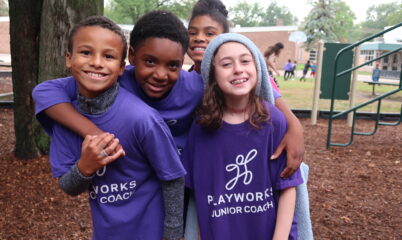
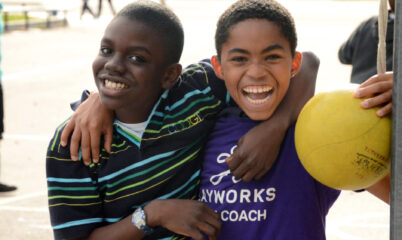
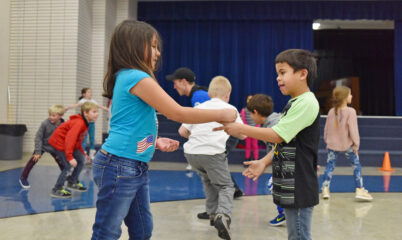
A new study published in the Health Education Journal examined Playworks’ approach to recess and concluded that “recess plays a critical role in school culture. Recess can impact student–teacher relationships, bullying, and student behavior in the classroom.”
The Playworks schools studied had:
-
More positive adult interactions: Students at Playworks schools were five times more likely to have a positive interaction with an adult on the playground than at non-Playworks schools.
-
Less conflict than other schools: Playworks schools had three times less observed conflict than non-Playworks schools.
-
Less conflict over time: Conflict on the playground decreased by an average of 58% at Playworks schools from the beginning to end of the school year.
-
Improved classroom behavior: The researchers found that “recess interventions, particularly the use of a recess coach and peer-leadership training program, can be used to teach social–emotional competencies that can in turn impact classroom behavior.”
The researchers noted that positive interactions with adults are an especially important component of recess. They recommended that “adults in schools, such as teachers and staff, should be encouraged to actively engage in play with children during recess, as these interactions have the potential to transform student–teacher relationships, contribute to a more positive school climate and favourably impact students’ social–emotional competencies.”
According to the researchers, trusting relationships with adults in schools are a “protective mechanism” for students with difficult experiences at home. Recess is a key opportunity to build these relationships.
Read More:
“The impact of a multi-component physical activity programme in low-income elementary schools,” Health Education Journal 1, no. 14 (2017).