On the playground, teamwork is active. It’s messy. It’s constantly being tested and rebuilt in real time. And at Playworks, we know something important:
Teamwork isn’t just something to be taught. It also needs to be practiced.
It’s a muscle. And one of the best places to build and strengthen it?
Play!
Here are a few ways kids naturally develop teamwork skills through play, along with unexpected games that bring those lessons to life.
Teamwork Starts with Listening (Not Just Talking)
In most group settings, children (and adults) are quick to speak but slower to listen.
Games flip that dynamic. To succeed, players have to pay attention, adjust, and respond in the moment.
Try this: Up, Down, Stop, Go
Players follow verbal commands tied to actions…until the rules suddenly change.
What kids learn:
- Focus and self-control
- How to process and respond quickly
- The importance of truly listening
For adults: Take this as a reminder that strong teams aren’t just heard—they hear. Real collaboration starts with paying attention, especially when things change.
The takeaway: You can’t work as a team if you’re not tuned in to each other.
Great Teams Make It Safe to Try (and Mess Up)
On the playground, mistakes happen constantly, and the best games give plenty of opportunities to try, fail, learn, then try again.
That’s where confidence and connection start to grow.
Try this: Watch Your Back Tag
Players are constantly tagging and being tagged, but no one is out for long.
What kids learn:
- Resilience and confidence
- How to stay engaged after mistakes
- Supporting others in the game
For adults: The best teams aren’t afraid of mistakes because they know someone will have their back and there is always an opportunity to learn and grow.
The takeaway: Teams thrive when people feel safe enough to take risks.
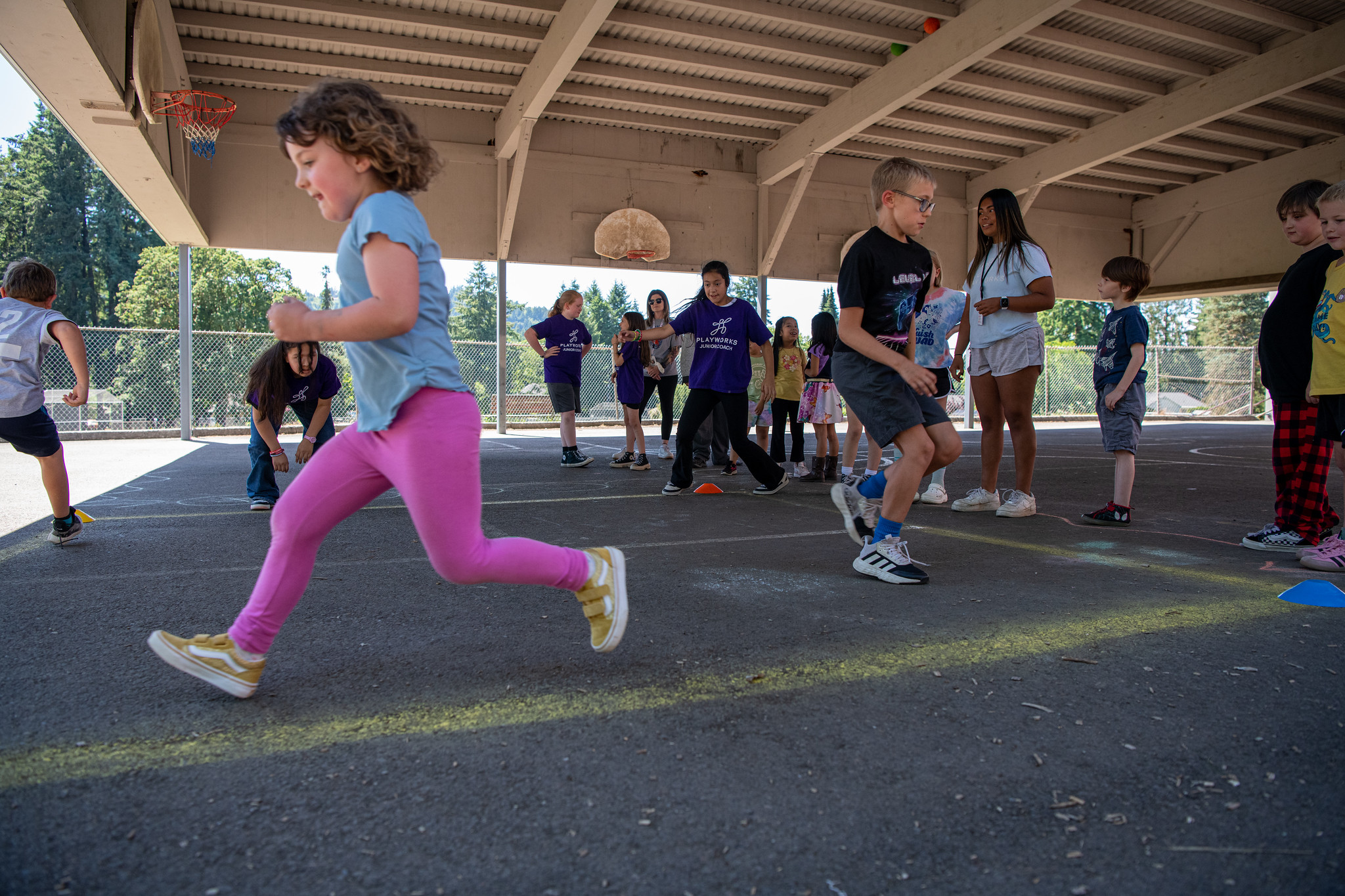
Every Role Matters and Roles Can Change
On a strong team, everyone has a role to play and something to contribute toward the goal.
Play creates space for kids to try on many roles – leading, following, and adapting depending on what the moment calls for.
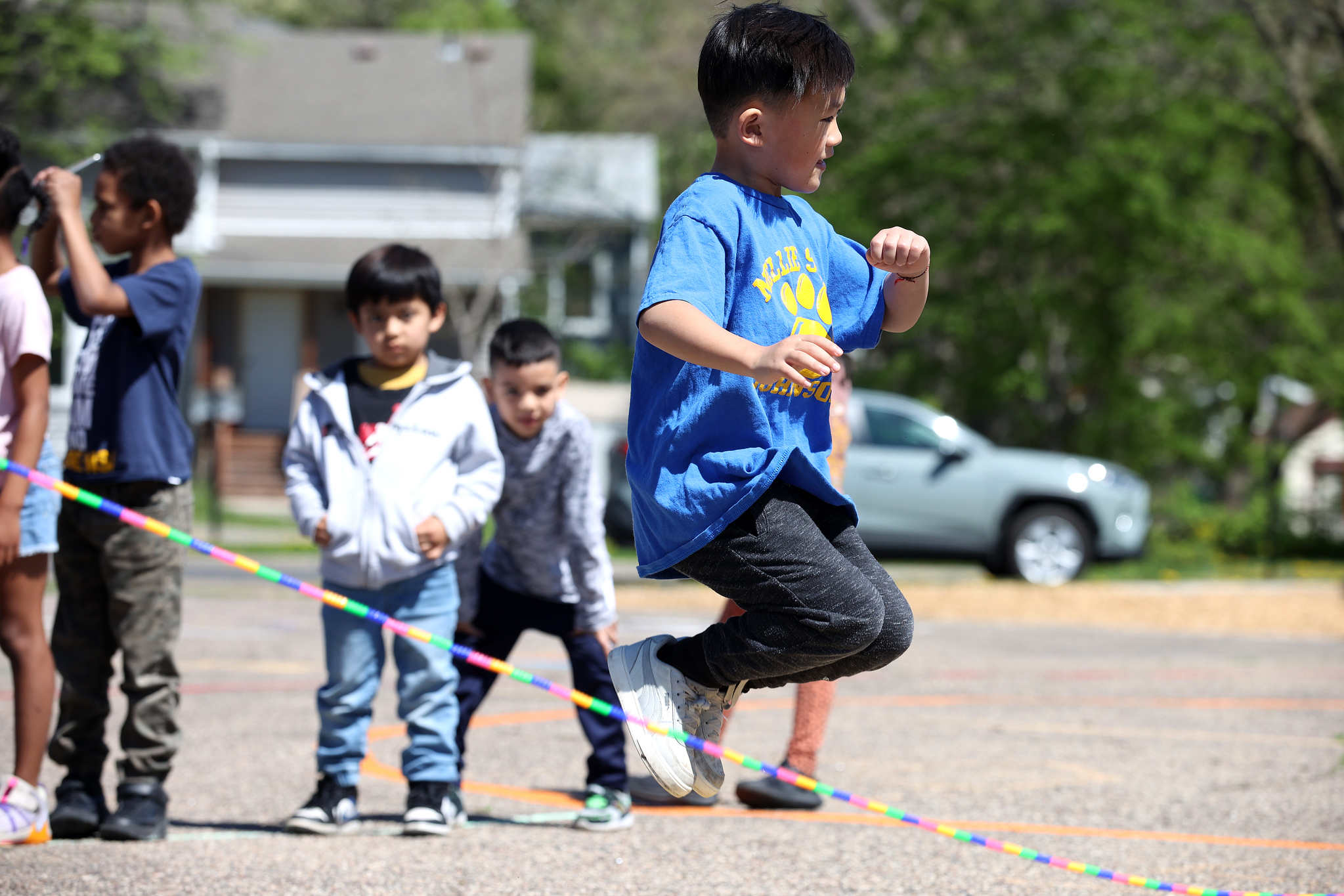
Try this: Double Dutch
Success depends on timing, communication, and players working in sync.
What kids learn:
- Awareness of others
- Timing and coordination
- Flexibility in roles
For adults: It’s a powerful reminder that leadership isn’t static. Great teams adjust their pace and roles to help everyone succeed.
The takeaway: Teamwork works best when everyone knows their role and is working in alignment toward a shared goal.
Conflict Isn’t the Problem. It’s Part of the Process
Sometimes, disagreements are an unavoidable part of play.
Rules get challenged. Calls get debated. And then, after a quick round of rock, paper, scissors, kids agree and keep going.
That’s where real teamwork is built.
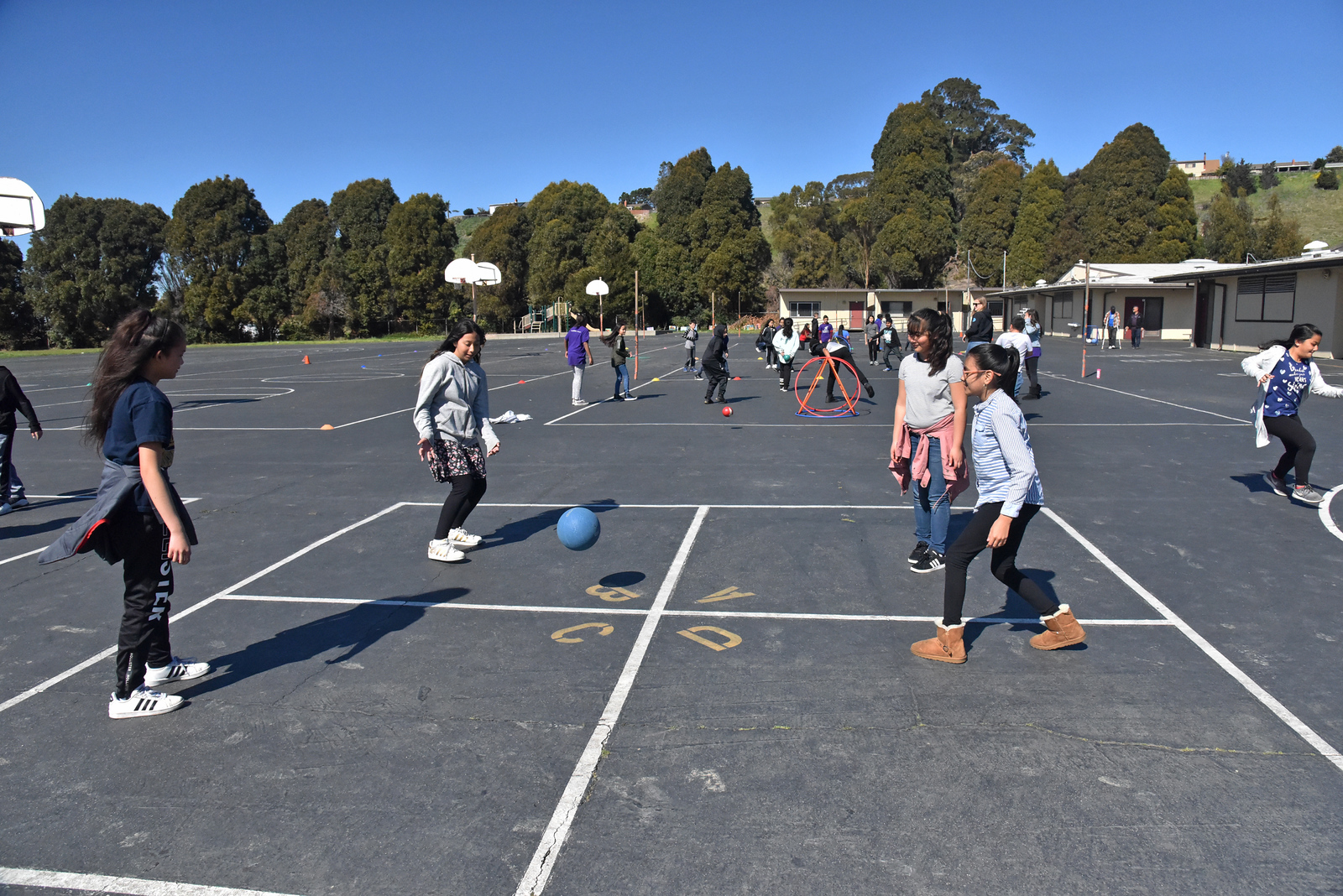
Try this: Foursquare
Fast-paced and ever-changing, it naturally creates moments of disagreement and resolution.
What kids learn:
- Communication under pressure
- Respect for others
- How to move forward together
For adults: Conflict doesn’t break teams, but avoiding it does. The key is learning how to navigate it productively.
The takeaway: Strong teams aren’t conflict-free. They’re conflict-capable.
Teamwork Takes Coordination (Not Just Cooperation)
Working together isn’t just about agreeing; it’s about timing, awareness, and moving as one.
Some of the best teamwork moments happen when a group finds a rhythm.
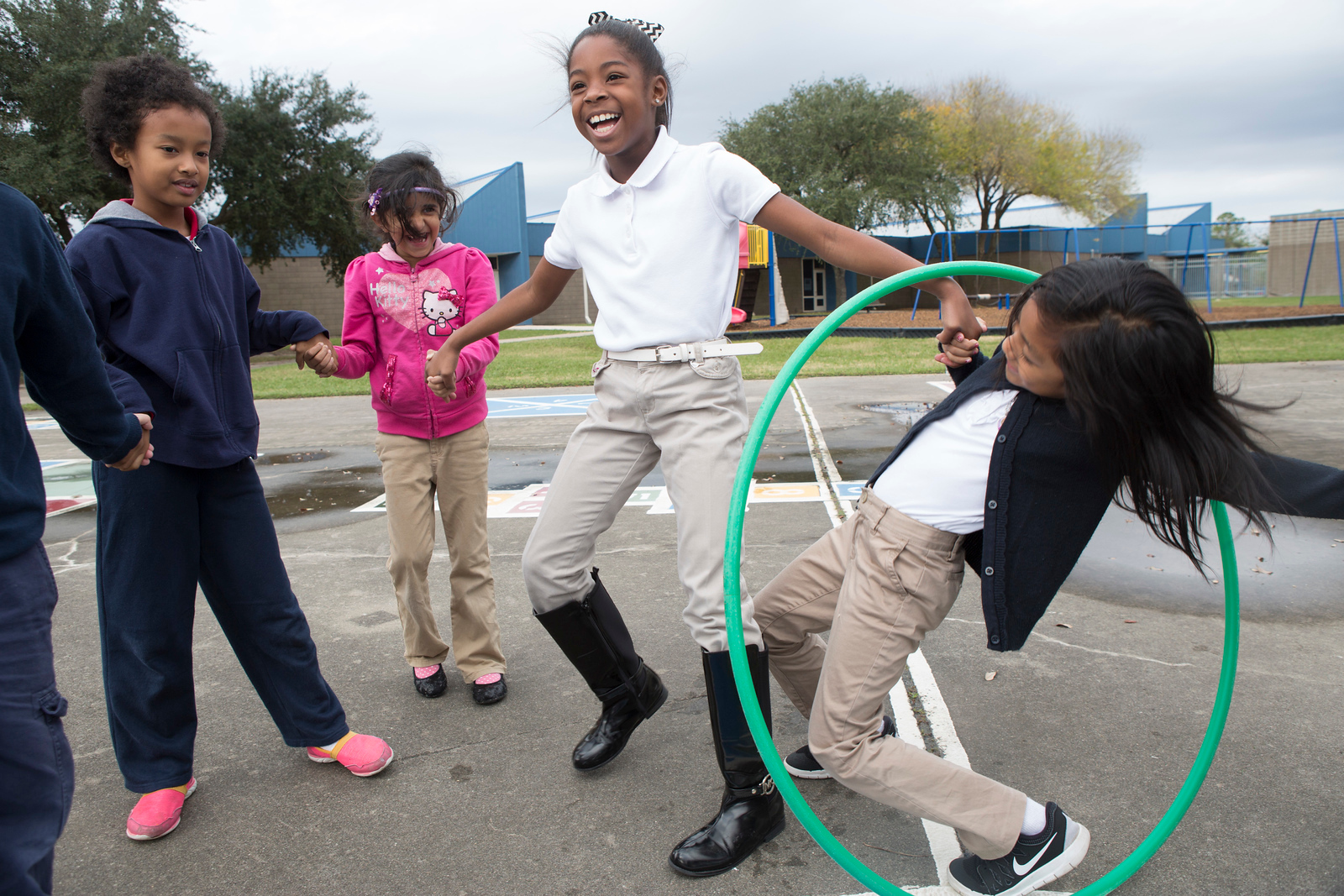
Try this: Hula Hoop Challenge
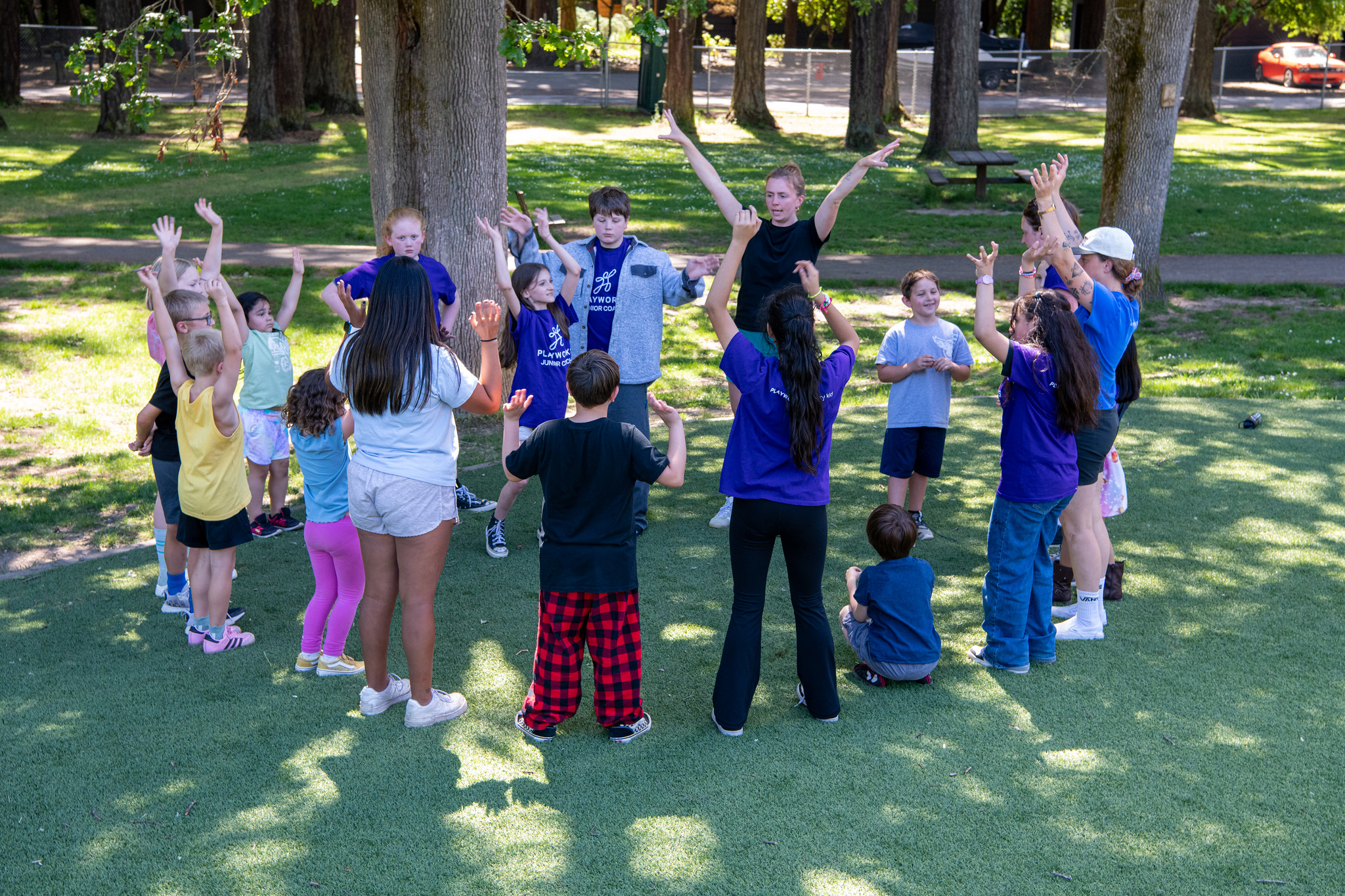
Players stand in a circle holding hands with a hula hoop looped over one pair of arms. Without letting go, the group must pass the hoop all the way around the circle.
What kids learn:
- Coordination and patience
- Nonverbal communication
- Supporting the group’s success over individual speed
For adults: It’s a reminder that teamwork isn’t always about doing more but instead about moving together. Progress depends on how well we adjust to each other, not just how fast we go on our own.
The takeaway: Strong teams can work and move in ways that benefit the entire group.
Ready to Build Teamwork Through Play?
Explore the Playworks Game Library and discover more fun game ideas, and connect with us to learn how you can bring Playworks to your school or program.