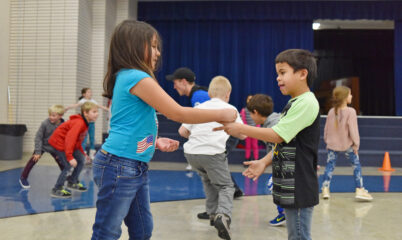
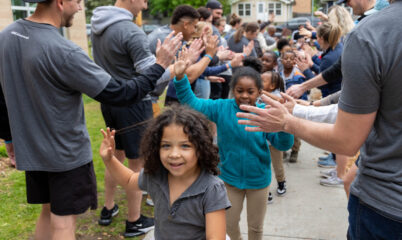
Children need recess daily. The experts tell us and we see it in our kids any day they miss out on play time. LiveScience reminded us all this in an article last week.
When Deborah Gilboa’s second-oldest son Nadav started coming home from first grade with discipline warnings from his teacher, Gilboa and her husband were perplexed. Nadav, who had just turned 6, had the same teacher in kindergarten and had rarely gotten into trouble.
So Gilboa, a family medicine doctor in Pittsburgh who consults at Deborahgilboamd.com, and her husband sat down to ask their son what was going on. He had the answer right away.
“He said, ‘In kindergarten we had recess twice a day and we went to gym twice a week,'” Gilboa told LiveScience. Now, as a first-grader, Nadav’s class only went to gym once every six days. They had one recess period a day, split with lunch, so that Nadav had only about 15 minutes a day to run around.
“He said, ‘I get this feeling in my legs when they want to run and that feeling moves up to my belly and when that feeling moves up to my head I can’t remember what the rules are,” Gilboa said. “So he had really noticed a big change in his own behavior and self-control.”
For kids like Nadav, the transition from summer freedom to the grindstone of the classroom may be tough. With schools under pressure to meet standardized testing goals, recess has been cut back and even eliminated in some school districts. The irony, experts say, is that schools may be shooting themselves in the foot by taking away playtime that’s crucial to a child’s growth.
An overall decrease in playtime in even young children is resulting in kids who don’t have a “culture of play,” said Jill Vialet, the founder of Playworks, a nonprofit dedicated to improving the climate of play in schools, teaching kids the kinds of games they would have once learned from older peers.
And Nadav isn’t the only kid who finds that a school day without playtime makes sitting still tough: Kids who don’t play much also tend to struggle with self-control and learning, experts say, which can haunt them throughout their lives.
Children participate in playground games under the supervision of a coach from Playworks, a non-profit that teaches kids classic games and conflict-resolution strategies.
“Play is really a developmentally significant experience,” Vialet told LiveScience. “It helps kids become high-functioning citizens and grown-ups.”
Read more.
Do your kids get enough recess?