Recently I was asked to speak at the TEDx Conference in San Francisco on the role of play and creativity. The theme of my talk was based on a quote by George Bernard Shaw: “The reasonable man adapts himself to the conditions that surround him. The unreasonable man adapts surrounding conditions to himself. All progress therefore depends on the unreasonable man.“
At first glance, the quote almost seems a little grandiose as it relates to an organization dedicated to bringing play every day to children. But the great irony (and the point of my talk, which is available here) is that play creates an incredibly robust foundation for people to really discover themselves as changemakers — people confident and competent in adapting the surrounding conditions and thus contributing to progress. Changemakers is a term coined by Bill Drayton, founder of Ashoka and a human who could quite accurately be characterized as obsessed with creating change.
Bill identifies four basic characteristics/experiences necessary for people to develop as changemakers – experiences and characteristics, he has found, that must be a part of childhood: empathy, leadership, teamwork, and practical experience in making a difference. In other words, kids need to be given the opportunity to impact their environment – to make decisions that affect the world around them – and to do this not just as individuals, but as part of a collective effort.
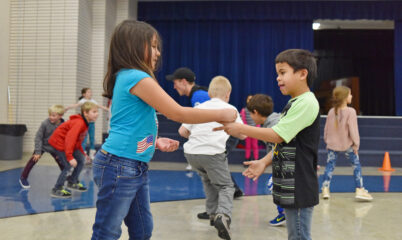
One of the amazing things about play is that it really engenders a sense of empathy in kids – it doesn’t always make them immediately ‘nicer’ – that’s not the same thing. What it does do is give them a practical opportunity to explore common interests and a concrete chance to experience and experiment with interdependence.
Stuart Brown writes a lot about this in his book Play. One great example is self-handicapping – the way play teaches kids to create certain “field-leveling” challenges that make the game more interesting and more likely to continue on for an extended period of time. Self-handicapping might be switching players to even teams, or having older kids only use their left hands. In a lot of ways, this flies directly in the face of our basic understanding of human nature. And yet we know that understanding our interdependence is essential to success in group dynamics. Play is an intrinsically motivated chance for kids to learn about the benefits of paying attention to other people’s needs.
While we still have half the year to go, here at Playworks the HR staff are gearing up for our biggest year ever of staff recruitment. We are anticipating opening in six new cities – among those under consideration are Denver, Detroit, Philadelphia, Houston, St. Paul and Little Rock. Maybe even Seattle.
If you know anyone – maybe just finishing college or looking around for a way to make a difference – please let them know about the possibility of unreasonable work with Playworks. We welcome them.
Play, Progress and the Unreasonable Man
September 22, 2026
How Play Teaches Kids and Adults to Use Good Judgement ›
Any time kids play, they make dozens of small judgment calls they may not even notice. Sometimes this looks like settling a disputed call with rock, paper, scissors instead of…

September 1, 2026
Reflecting on the The Crucial Role of Recess ›
Playworks partnered with Say Yes To Recess to explore updates to the American Academy of Pediatrics‘ policy statement The Crucial Role of Recess. In early 2026, the American Academy of…

August 25, 2026
Build Back-to-School Confidence With Play ›
The back-to-school season is a time of immense change, bringing with it new routines, new faces, and the inevitable jitters that accompany a fresh start. For many students, the transition…