We’ve seen the headlines, and we’ve seen it in our communities. Social media use is changing the way children and youth connect, creating new barriers to authentic relationships with peers and adults. It may have been necessary for connection during the pandemic, but it’s difficult to develop friendships — and the social skills that feed them — from behind a screen.
If we want to counteract these isolating effects, we need to lean into the most natural and powerful tool kids already have: play.
Play as the Foundation of Relationships
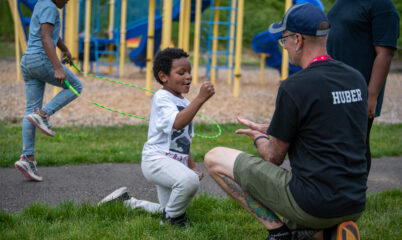
At Playworks, a national organization that partners with schools and community-based organizations, we create opportunities for kids to play. We know from both research and experience that play is critical to healthy physical and social development. It’s how kids learn to be friends, teammates, and collaborators — lessons that carry into classrooms and outside of school.
In fact, our ability to develop relationships as adults has its foundation in our experiences of play as children. We played at home with siblings and family members, at playgrounds with kids we didn’t yet know, at recess with classmates, and in after-school programs and neighborhoods. Those moments built the skills that make it possible for us to form new relationships throughout our lives.
Why Play Works
What makes play so powerful is that children are intrinsically motivated to do it. If the conditions are welcoming — space, time, and opportunity — kids will join in, often with peers they’ve never met before. A fifth-grader at a Playworks school described it best:
“Before, I used to be a little shy and nervous about talking to new people. But now, I feel like I can talk to anyone! That’s helped me be more confident when I have to speak up in class or work on group projects. I even made some new friends because I started talking more and being friendly to everyone.”
Play is also how we all learned to take risks and to fail and try again. Remember getting out in a game of Four Square or kickball? The world didn’t end. The game kept going. You or your team got another turn. These life lessons are possible because of the relationships built through playing together.
There Is Evidence Play Works
For nearly three decades, educators have reported clear impact of play for their students, including the following:
- 97% of educators in Playworks schools said playing helps their students strengthen their overall health and well-being, and 92% credited Playworks with strengthening students’ ability to manage their emotions. It isn’t just fun and games, playing also builds resilience.
- Children themselves make the strongest case for why every child should get to play every day. In just one year, a survey of 636 students at schools with Playworks coaches showed that about 80% of students reported increased academic motivation, increased perseverance, and improved relationships with peers. That growth doesn’t happen when a child is sitting alone on social media. And that is a real loss.
Investing in Play
Since 2020, Playworks has helped kids relearn social skills that stalled during the pandemic. Across hundreds of schools and after-school programs, we’ve seen how safe, organized play spaces help kids connect, build skills, and experience joy. We need more of these structured spaces for kids to develop the crucial skills they need to thrive on and offline. Plus, these programs provide engaging alternatives to screentime and scrolling. That’s why Playworks has joined a coalition launched by Children’s Funding Project and Afterschool Alliance to ensure payouts from current social media lawsuits are directed to after-school, summer, and other youth development programs.
I invite you to join me in this coalition. Together, we can make sure every child gets the childhood they deserve: one filled with play, connection, and joy.