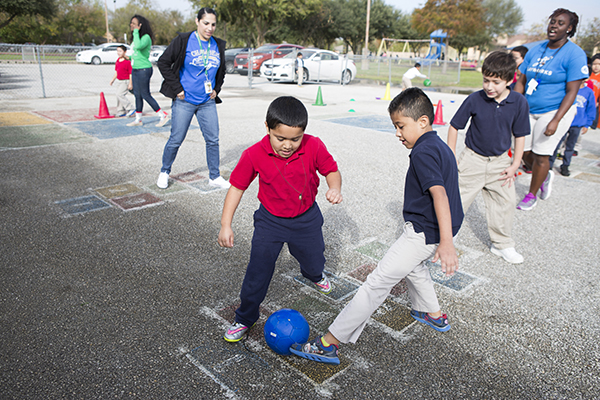
How do we define and assess play among elementary school students? The answer: we don’t . . . until now.
Although researchers, educators, and parents agree that play is important, there is currently no valid assessment tool to measure play within a school setting. To address this gap, Playworks is creating the Great Recess Framework, a rubric that will provide schools a guide to making play welcoming and accessible for all students.
The Great Recess Framework helps schools evaluate whether or not students have access to safe environments that promote engaging, healthy play; the level of engagement and activity among students and staff; and whether students are empowered to lead games and resolve their own conflicts. The Framework is aligned with the Centers for Disease Control and SHAPE America’s new guidelines.
“It is critical that we analyze play under a shared definition and assessment tool, so there is a collective understanding of what impact quality play can have for all children in all schools,” said Playworks President and COO Elizabeth Cushing.
Read more about the Great Recess Framework in the Brookings blog, “A new way to measure the benefits of school recess.”