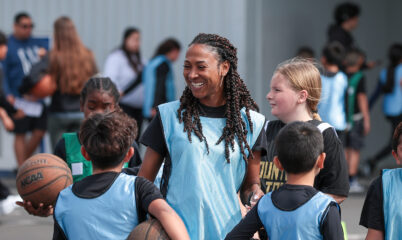
Conflict is a natural part of recess (and of life). Who’s out in the game of Four Square? Which team gets to start with the ball?
There are game conflicts, conflicts over the recess rules, and personal conflicts. Especially with multiple classrooms at recess together and students playing with people they might not have played with before, knowing how to manage these situations is more important than ever.
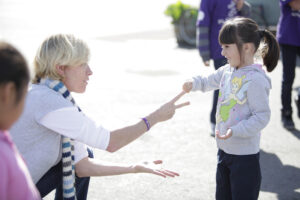 Rock Paper Scissors is great for simple conflicts. We love it for games like Switch, Foursquare, and even tag games like Watch Your Back Tag, as it’s a quick way to settle who was first in line or who has the next turn on the swings. By playing a quick game of rock paper scissors, students learn how to resolve their own conflicts quickly and effectively so that they can spend less time arguing and more time playing.
However, when conflicts are more complicated or personal that a game of rock paper scissors won’t solve, students need to know how to approach them in a positive and peaceful way, processing their emotions and understand the ramifications of the situation.
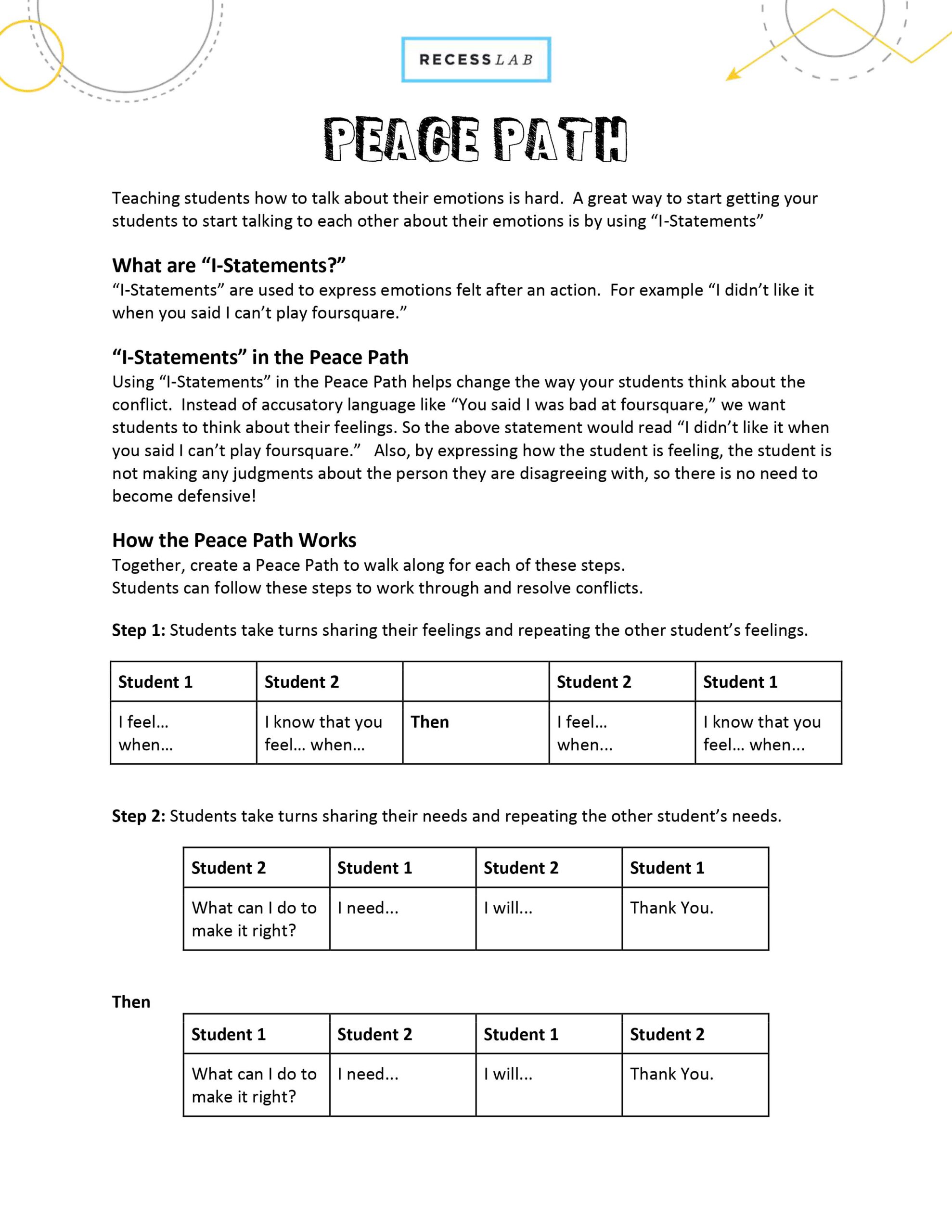
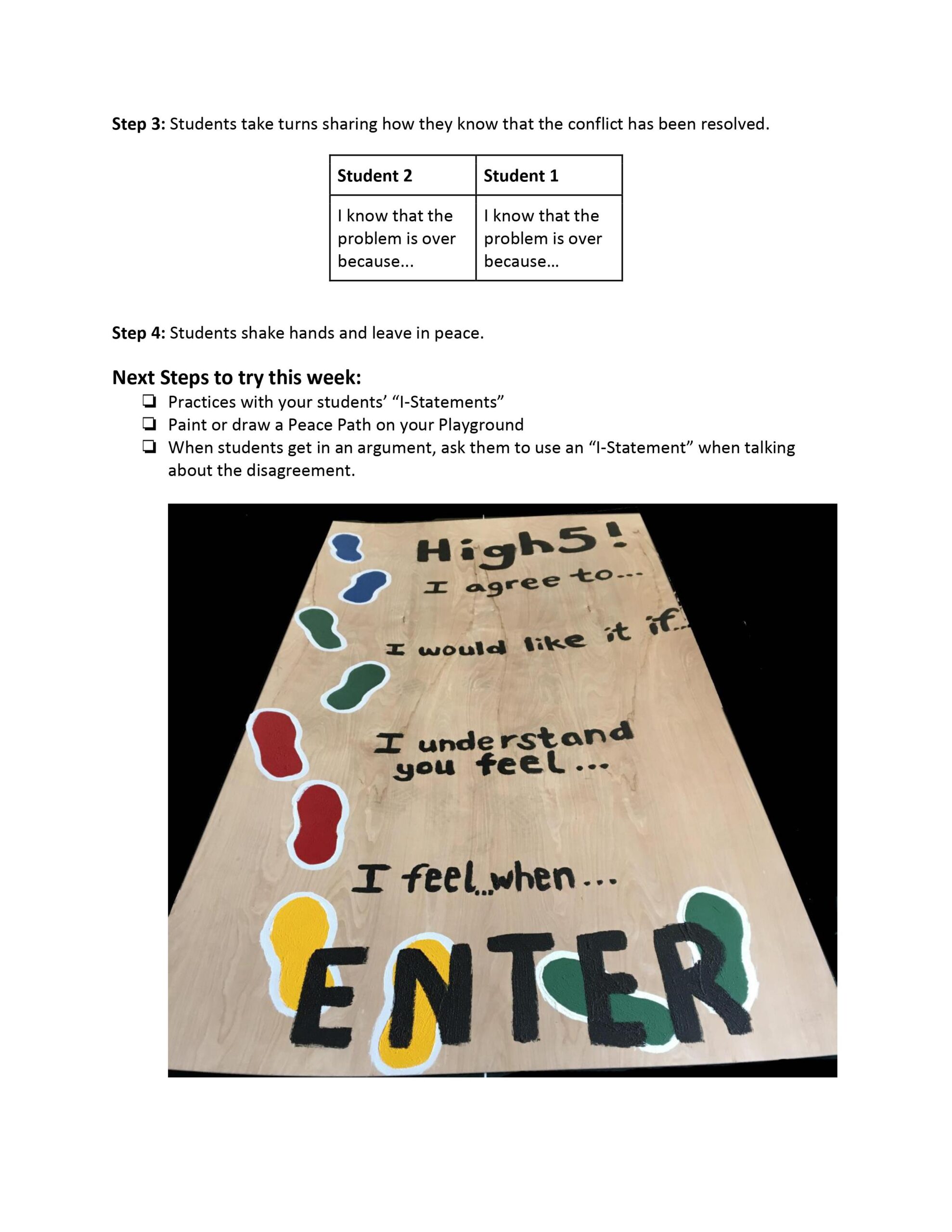 Peace Paths are a great addition to your playground because they provide students with a script to follow to talk through their conflicts.
You can create your own script, use our sample here. No matter what script you’re using, though, it’s good to start the Peace Path with a few deep breaths or another calming exercise to make sure all parties are able to enter the Peace Path calmly and respectfully. If a student isn’t ready yet, they can take a break until they’re ready.
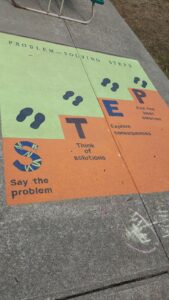
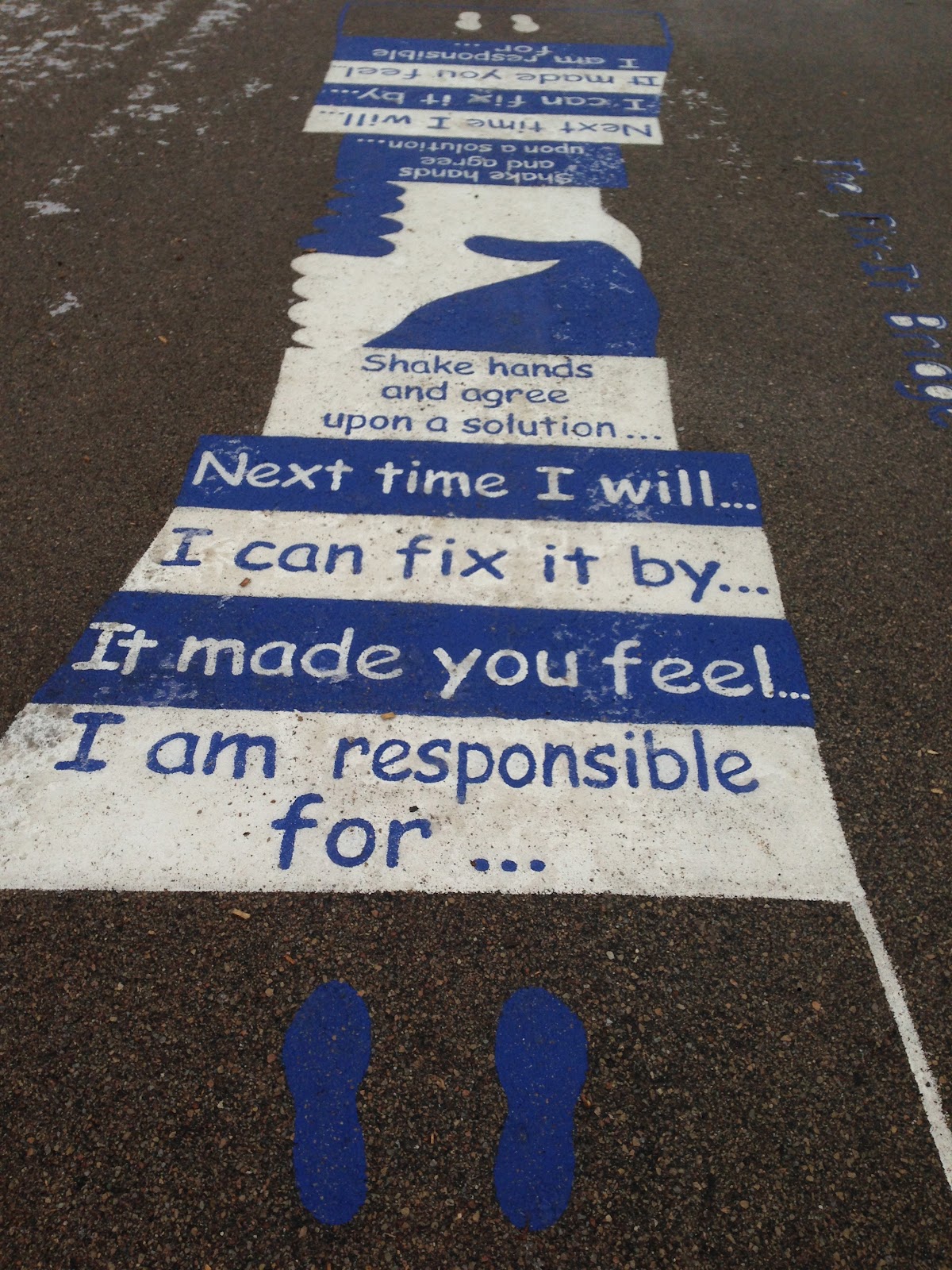 Having the language to work through conflict is important, and having a visual cue on the playground can be really helpful as well. Each playground looks different, and schools are encouraged to paint a peace path that would work well for them and their students. While some schools paint their Peace Path on the ground for students to walk on (such as the examples here), you can also post your path on a wall or fence for students to walk along as they talk through their problem.
Ensuring that school staff know how to use the Peace Path and are well-equipped with the language needed to effectively solve conflict is key. Teaching students how to talk about their emotions can be challenging, but using the language of the Peace Path and the visual cues can be a good place to start.