Play Deserts: What Would YOU Measure?

Bring Play To Your City

GO

Tweets

  • @CentroNia Thanks for the shout out! Happy Friday. Hope you have a playful weekend! 12 hours 22 min ago
  • @kaboom Thanks for the retweet! Hope you get plenty of #playoutdoors this weekend! 12 hours 25 min ago
  • "Hacking School Recess for a Better Tomorrow." Interview w/ @JillVialet by 'Will Play Games for Change': http://t.co/JxhgVPi1 18 hours 32 min ago
  • "His Right to Recess: #ADHD Kids Should Never Lose Play!" http://t.co/B6WRXcTy #recesscounts 19 hours 13 min ago
  • @ModernMom Thanks for tweeting @jillvialet's post! Have a playful weekend. 19 hours 59 min ago

There has been a lot of talk over the last couple of months about the idea of “food deserts,” areas with limited access to affordable and nutritious foods, but only recently have the US Department of Health and Human Services (HHS) and the Centers for Disease Control and Prevention (CDC) begun talking about the idea of “play deserts,” mapping areas where there is limited access to opportunities for physical activity.
 
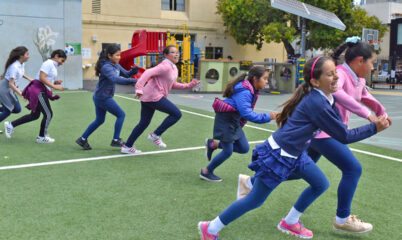
If the HHS and the CDC are going to undertake an analysis of play deserts and their public health consequences, it is essential that they look not just at the built environment, but also at the full spectrum of opportunities for play and physical activity – both in-school and out — if they are to really understand and ultimately address the environmental conditions that have resulted in our physical inactivity crisis. For example, a chaotic and unsafe recess is a major contributor to this crisis. A 2007 report from the Robert Wood Johnson Foundation showed that recess is the number one way to increase physical activity in children, so making recess a safe place to play should be a priority.  

I get asked all the time, “What happened?”  “How is it possible that kids don’t know the rules to games that were such a huge part of MY childhood?”  There isn’t an easy answer. This isn’t an issue of simply not having access to parks and playgrounds.  Doesn't an unsafe and chaotic recess play a role in this and represent a play desert, too?  This isn’t just about vilifying screen time.  The world has changed. 

What would you measure if you were trying to map out play deserts?
Comments

Need to measure access and quality, too

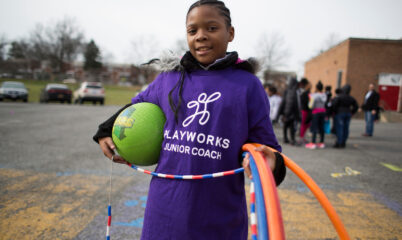
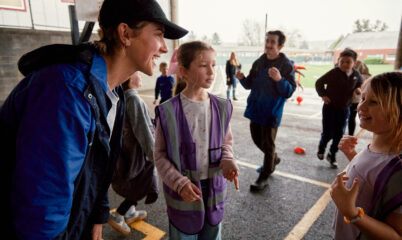
I agree that giving a child a place to play and time is just the beginning. To really understand the state of play, we need to look around the place. Are there sidewalks, cross walks, stop signs or stoplights that enable kids and their families to get to the playspace. Is there graffit, trash or other conditions which makes it a place no one wants to visit or use? Is there shade if it is in the south or southwest on a hot summer day? Is the playspace somewhere families routinely walk? Are there benches for caregivers to sit? All these and many other factors determine whether a playspace is a place children can actually access or one of the saddest of sights--an empty playground. Then, as Jill notes, even a quality playspace that's easy and safe to get to, may need more than kids to succeed. At schools, children need far more than 15 or 20 minutes of recess to engage in meaningful play. If they have not been in the habit of play, a play associate, as Cynthia notes, or a Playworks team member, may be essential to encourage and inspire great play. In a nationwide poll conducted by KaBOOM!, which reinforces other research, the single greatest barrier to parents permitting their children to play at a playground is the lack of adult supervision. All this means that a map of the great stretches of play deserts in the USA must reflect more than pin pricks on a map. It must also have the means to engage parents and caregivers online, so they can provide the quality ratings that will truly indicate whether a playground is a place where play happens. Ideally, the same tool could enable parents to adopt a playspace and volunteers to make sure an adult is present during prime play hours. A map of play deserts that fails to address the physical, social and cultural context will not be a map that can truly guide policy and create bottoms-up citizen engagement.

Jim Hunn, VP, KaBOOM!

Atlanta's No Play Zones

Last year the Atlanta Taskforce on Play (ATOP) audited and photographed all of the city's public playgrounds. We plotted them on a map and identified our "No Play Zones", which sadly covered almost the entire west side of the city. Since then many of our Rec centers have closed down, further limiting safe access to play.

This is only the beginning of a clear picture. Certainly evaluating school recess is a next step. Perhaps if there is a way to evaluate crime in an area and determine its effect on Children's sense of security that would be an impotant indicator. Also, the distance between children and a park should be measured.

I'm beginning to see more and more the importance of playworkers, both in helping stabilize the play environments at school and in public parks. I also had a realization when it snowed here last week. That is that there are two times when even the most sedentary child can't wait to go out and play: 1) on a snow day, and 2) for recess.
(written on iPhone :not edited)